All Saints B: A Vision of Home

OLD TESTAMENT: Isaiah 25: 6-9

To read the passage from IsaiahHouse-On-The-Hill

This reading, which we also read on Easter Day, comes within the block of material (Isaiah 24-27) which many refer to as The Isaiah Apocalypse. The view of the future here is universal and speaks of God’s power in the cosmic realm as well as the earthly realm. It is probable that whoever wrote this material truly thought that the crucial event in world history was about to dawn. This material is probably dated about the last quarter of the 8th century BCE, probably late in the Babylonian exile or perhaps even after it was over.

All Saints’ Day is, of course, that Sunday that we set aside to remember those who have walked before us.  But with that, it is also a time to look ahead, to realize that we are all connected in an eternal chain of witnesses.  Our chapter in the story would not make sense without the chapters before us and the future is dependent on our chapter being well-written.

The text that we read envisions a significant role for Jerusalem, the city set on the mountain of the Lord. Here God will offer divine hospitality to all people. Both the food and the wine are described in superlative terms. Through this divine welcome, the shroud of destruction and horror will be lifted off all the peoples of the earth. Death itself will be swallowed up. The sadness of tears and the shame of disgrace of God’s people will be removed. These promises of restoration are the word of the Lord. The salvation of God and God’s hospitality can only lead to one thing: ‘let us rejoice and be glad’.

This Scripture is about waiting. It is looking forward to a different time. Keep in mind the context of this lesson. The people were in the wilderness. The Babylonians had swept in, had captured the Israelites, destroyed the temple of God, and scattered the people of God into the wilderness. In the wilderness, the people were asking that desperate question, “Where is God?” Many have lost their faith. There were desperate cries, desperate questions in the wilderness, and it was there in the despair and in the wilderness that God came to the people of Israel (but not in the way that they would have expected!). Never could they have predicted what they heard from Isaiah and would soon see. God was using Cyrus, king of Persia, to lay the groundwork for their return home. “I will give you the treasures of darkness,” says the Lord God. Cyrus, king of Persia, would capture the Babylonians. It was Cyrus that God was using, the king of Persia who didn’t even believe in God. Marduke was his god. Still, God was using this surprise to make it possible for the people of God scattered in the wilderness to return home, which they eventually did.

For us, too, it is a vision of home. All Saints’ Day is always full of some psychological and spiritual tensions as we walk between profound grief and joyful remembrance and between what is and what will be. But this passage tells us that death shall soon be no more, “swallowed up forever” as the text actually says, overtaken by life everlasting. It brings comfort but it also brings a bit of heartache. There is a part of us that wants that now, wants to be with those we love now. There’s a part of us that wishes that we had some means of understanding or overcoming what happens on this earth. We believe; we try hard; we try to patiently wait. And the storms continue to come. And yet, even waiting, is part of our faith journey. And in the waiting, we come to learn that life is there all along.

  1. What is your response to this passage?
  2. What stands in the way of our waiting for God?
  3. What would your reaction to this vision have been in the context in which it was written?
  4. What is your reaction to this vision now?


NEW TESTAMENT: Revelation 21: 1-6a

To read the passage from Revelation

In spite of its veiled images and difficulties presented in interpretation, the Book of Revelation presents some beautiful depictions of hope and promise. Here, using Old Testament imagery (some borrowed from the Isaiah passage that we just read), we are presented with a veritable tapestry of hope. We are not just looking to the past; we are also looking ahead. And it is not some far off place to which we are looking, but to a time when the here and the now will be renewed. Notice that it is not just heaven that is renewed but the very earth itself. All that we see and know and all in which we have our being will be and is being recreated before our very eyes.

And all this happens because of God. Finally, God will make the divine dwelling place among us. Do you remember that cloud that followed the Israelites around, the sign of God’s Presence? The Ark of the Covenant symbolized this sort of removed image of God actually dwelling with the people. Then in the Gospel of John, we are told in very similar language that God lived among us in Christ. And the story of the Festival of Pentecost is the sign of continued Divine Presence. But here…this passage takes it even further. God will be fully with us. God, the Creator, the Divine Presence, will now dwell with mortals. And God’s very Presence will be enough to wipe away tears and mourning, banish death for good, and make everything new.

The writer of this Revelation passage finishes with the most amazing thing. “It is done! I am the Alpha and the Omega, the beginning and the end.” There will finally be established the truth which has been peeking out at us since the very dawn of human history—that God, indeed, stands before, in, and after all of Creation. It is a metaphorical glimpse at the end of the story as we know it and, yet, it is the very beginning of life to come. This reading gives us a glimpse of what the author thought that might look like.

What a great Scripture to read for All Saints’! At the same time that we are remembering and perhaps still grieving those who are gone, we are given this reminder of what’s to come. It is an affirmation that this story that began when God breathed life into Creation is not quite finished. And we are part of it, part of the ongoing conversation that began long before we got here and will continue long after we are gone.

The point is that the past and the future connect us all. I think that’s what the Scripture is reminding us—not that there is some promised land out there where we all come out OK, but, rather that we are part of it now. We, like those that came before us, are part of building that future city, building the Kingdom of God in its fullness. The story is not yet finished, but it’s definitely worth the read!

  1. How does this passage speak to you?
  2. How does this speak to you within the context of All Saints’ Day?
  3. What does the idea of our connection to the past and the future mean for you?

GOSPEL: John 11: 32-44

To read the Gospel passage

In this week’s Gospel lesson, a man dies and is restored to life, sisters complain and weep, and the crowd comments, weeps and complains. Front and center, however, is Jesus. He is really the focal point of the story, not Lazarus. He determines what will happen. He says, “Take off the grave clothes and let him go.” So it is with our own understanding of life and death. People weep and commiserate. They wonder what happens next, to them and to the one who has gone ahead. But Jesus, the author and finisher of faith, the way, the truth and the life, is the focal point at the moment of death. He says, “Peace be with you.” Jesus is the assurance that there is always something more. When we have Jesus, we are prepared for anything that follows.

For many, this is one of those odd, somewhat problematic texts. After all, people don’t usually get up and walk out of tombs into the land of the living. This story challenges norms and even reality, to some extent. Perhaps that is the point. Perhaps it sort of jolts us into the realization that God is capable of more, that God will go beyond what we plan, what we think, even what we imagine. And yet, “Jesus wept.” In the older translations, it is supposedly the shortest verse in the Bible. Jesus’ tears remind us that grief is real and that God realizes that and truly cares what happens to us.

Ironically, this is the act that would ultimately cost Jesus his life. Bringing Lazarus to life would end his own. After this, the Sanhedrin’s step in and the journey to Jerusalem, mock trial and all, escalates. There is no turning back. Perhaps it should be our turn to weep. But we are given a new hope and a new promise. Jesus said, “Unbind him, and let him go.”…He will do the same for us. “Did I not tell you that if you believed, you would see the glory of God?”

The truth is, on some level, we are all lifeless at times. We are all bound by things in this world that literally suck the life out of us. Think about it. This is also an account of the raising of Martha and Mary and all of those who loved Lazarus, raised out of grief to hope and life. And, for us, Christ is there breathing life into us yet again. We are always in the process of and actually becoming a new creation. The story of this raising is more than a miracle; it is the stuff that we are made of. Jesus probably weeps for us too—weeps that we hurt, weeps that we get so wrapped up in the minutia of life that makes us forget who we are, weeps that we are not who we are called to be. This is a story about the in-between. Some things don’t make sense. Some things don’t go like we plan. Some things we just miss. Creation groans towards its ultimate promise. And so we wait…But in the meantime, we can always get up, come out of our tomb, and let Jesus free us once again. Fred Craddock said that faith is first generation (From “A Twofold Death and Resurrection”, The Christian Century, available at http://www.religion-online.org/showarticle.asp?title=710). In other words, we do not inherit it. Oh, maybe we inherit a knowledge of it or the culture to rely on it, but this belief thing has to be ours. For that is the way that we see the glory of God for ourselves.

  1. What meaning does this passage hold for you?
  2. What does this say about faith?
  3. Where do you find yourself in this story?
  4. From what lifelessness do we need to be freed by Christ’s lifegiving breath?
  5. What do you think of the notion of faith being “first generation”?


Some Quotes for Further Reflection:


Joy is the most infallible sense of the presence of God. (Teilhard de Chardin)

Let us plant dates even though those who plant them will never eat them. We must live by the love of what we will never see…. Such disciplined love is what has given prophets, revolutionaries, and saints the courage to die for the future they envisaged. They make their own bodies the seed of their highest hope. (Rubem Alves quoted in There Is A Season by Joan Chittister).

The note we end on is and must be the note of inexhaustible possibility and hope. (Evelyn Underhill)


Closing


May God bless you with discomfort at easy answers, half-truths, and superficial relationships so that you may live deep within your heart. May God bless you with anger at injustice, oppression and exploitation of people, so that you may work for justice, freedom and peace. May God bless you with tears to shed for those who suffer from pain, rejection, starvation and war so that you may reach out my hand to comfort them and to turn their pain into joy. And may God bless you with enough foolishness to believe that, through your love, you can make a difference in this world so that you can do what others claim cannot be done. Amen. (Franciscan Prayer, Author Unknown)
Proper 22A: Harvest Season

WorldCommunionSunday-46619_232x117OLD TESTAMENT: Exodus 20: 1-4, 7-9, 12-20

To read the Old Testament Lectionary passage, click here

Israel’s destiny is rooted in the self-disclosure of God. These commandments should be taken not as a series of rules, but as a proclamation of who God is and how God shall be “practiced” by this community of now-liberated slaves. For the Israelites, God and the Way of God is known as Torah; God’s nearness is expressed as righteousness. This version of the Ten Commandments in Exodus was probably written and edited in light of the exile in Babylon. The specific laws would have been selected from among the many social and moral laws over many generations. It is probable that they did not magically drop out of the sky but rather grew out of a people’s understanding of who God was.

The people are first reminded that God has already saved them before, bringing them out of slavery, bringing them into relationship with God. But you can’t help noticing that these commandments are formative of who one is before God and how one lives in response to God.

You will notice that the “commandments”, as we know them come in distinct groupings. The first three commandments are preoccupied with the awesome claims of God’s person—who God is, who God is for us, how we revere and respect God. The fourth commandment honors the majesty of God, but also prepares us for relationship with God and relationship with others. The other six commandments have to do with relationships with others—how we act in the world toward others. It is really very simple: You shall love the Lord God with all your heart, and with all your soul, and with all your mind. (with all that you are, with every essence of your being) And…you shall love your neighbor as yourself. (But it’s interesting to note that there is some conflict in the way the commandments should be numbered. There are several different ways of presenting them between the Jewish, Roman Catholic, and Reformed Protestant traditions. So if that’s confusing, maybe you can just think of them as a call to loving God with all you are, with moving toward being wholly and completely the child of God that you were created to be.)

But God’s grace, as we are reminded, happened before any of these laws were laid down. It is expected, then, that in response to the salvific nature of God, the people will want to respond and stay in relationship with God. In Hebrew, these laws are known as the “ten words”, and for the most part are expressed in brief sentences. Tradition says that God gave these words directly to the people and then later Moses is summoned to receive the tablets on which they are written for posterity. (Exodus 24: 12-18)

Torah, or “law”, is really more about teaching and positive instruction rather than a list of rules, the way we would normally interpret “laws”. Think of it more like the law that we talk about when we say “natural laws” or “the laws of nature”. It is the way things are; it is the way order, rather than chaos and relationship, rather than separation ensues. It is the way that God draws us into God. The purpose of the “law”, then, is to choose life. From that standpoint, it’s probably not always helpful to go through the commandments one rule at a time as if they were a check list. We need to be clear that together they voice the larger and demanding vision of God that defines Biblical faith. (Notice that the second commandment brings into this vision all of Creation. Nothing in Creation is beyond God’s sovereign mystery.

In our modern-day society, there are those who have tried to make these words “law” in the judicial sense, simply by displaying them in courthouses or public buildings. But they are missing the fact that these are not laws to obey but the natural way that we are called to respond to the freedom of God. Rather than dictating what we should do, they depict who we are as a people of God.


It is a monstrous distortion of who and what [God] is to think that the self-revelation which took place on Sinai was nothing more than the proclamation of a legalistic code…

We Christians would do well to remember that the most joyous celebration in Judaism is the yearly feast of Simchat Torah, “the joy of Torah.” On this wild festival day, the Torah scroll is removed from the synagogue and in a long and exuberant parade through he streets of the city, is passed from hand to hand through the crowd. All the while, there is much singing and drinking and dancing. I was privileged some years ago to be in Tiberius, Israel on Simchat Torah. I will never forget the wild joy of the people as they danced through their streets to their holy cemetery, which contains the bodies of some of Judaism’s most revered figured, the great twelfth-century thinker Maimonides among them. After witnessing that energetic parade, and all the joyful faces streaked with sweat, I could never again think that the Torah was a burden for Jews. The Torah was a gift, that much was obvious to me that day. Similarly, the Ten Commandments are God’s gift, not only to the Jews, but to us who would claim that we have been rescued from our slavery, brought out of bondage by a mighty hand, and have been promised a new land. In that new land we are commanded by that God to live together in a community of justice and righteousness. The Ten are the foundation document for that new community…

Our age needs the Ten Commandments again, but not as sterile laws, hung on school room doors and court room walls. We need the living and vital Ten Commandments, all Ten, to remind us of the God who gave them and to remind us of what that God wants us finally to become. (Dr. John Holbert, The Ten Commandments: The Great Texts—A Preaching Commentary, p. 137-138)


  1. What meaning does this passage hold for you?
  2. What meaning for covenant do you see here?
  3. In what ways (if any) are these commandments formative for you?
  4. Which of these commandments or “groupings” is hardest for you—who God is, honoring Sabbath, or relating to others?
  5. Why do we often try to “legalize” the Ten Commandments?
  6. What would it mean to think of these Commandments as a “gift”?


NEW TESTAMENT: Philippians 3: 4b-14

To read the Lectionary Epistle passage, click here

Some of the language in this passage is just odd for us. The idea of confidence or boasting is usually not looked upon as a positive thing. (I mean, what happened to that whole humility thing?) And boasting because of privileges of birth and circumstance is even more bizarre. But here, Paul is making the claim that where boasting in other circumstances separates us from others, boasting or being in Christ unites all who boast for him. In the realm of the Spirit, distinctions are abolished. No one is better than the next.

This passage begins with Paul boasting about his own life and his own self. In fact, he sort of presents his resume’, as if he is quashing any readers or onlookers who might consider themselves above him. And then, just as quickly, he deflates himself. He essentially now claims that whatever good (or bad) that he’s done in the past is nothing in terms of his knowing Christ. We need to understand that Paul is not tossing away his past. He still claims it—good and bad. It is part of who he is. But he uses it to put it all in perspective. For him, the things that he valued in the past are no longer as important to him. (And the things that he regretted in his past are no longer in his way either.)

Paul now realizes that whoever and whatever he claims to be is because of God through Christ. The promise of new life is what now urges him forward in his journey. He, admittedly, is not there but he sees his journey as one of faith and one of life with Christ. This also sort of disputes those who claim that the “prize”, the “goal”, the “reward”—whatever they choose to call it—is because of who they are or what they’ve done. According to Paul, it is nothing WE do; rather, it is something that God does for us. Our journey, then, is a journey of faithfulness in the hope that God has promised.

We need at least four terms in English—“faith”, “belief”, “trust”, and “faithfulness”—to convey all the meanings of one Greek noun, pistis. The word represents more of a “totality” of life than any one of our translations suggest. To trust in something means to rely on it and complete trust means that there is no need to rely on anything else. So if we put our whole trust in God, we must abandon all other props in our lives. Paul emphasizes that he has not yet reached his goal, but the “yet” shows his trust in reaching it. For Paul, the “prize” for which he is aiming is the realization of his own calling from God brought to fulfillment.

This is also a treatise on faith itself. Paul would claim that blindly following rules of the religion (or even commandments) is not what brings one closer to God. That would be a belief that loses perspective, that lets the rules and the understandings get in the way of one’s faith. Paul is not claiming that he is better than others because he is better-versed in the faith; if anything, he is disputing that very claim.

Paul would probably contend that we are called to strip ourselves of those things that get in the way of our faith, that impede us on our journey toward that oneness with God. Paul is reminding us that included in that is a call to let go of our past, let go of the “I” that we’ve built ourselves up to be, and let go of the understandings that frame how we view God. It is a call to open ourselves to God’s movement in our lives and God’s guidance on this journey that we call faith. We’re all in this together. We’re all the same, journeying toward God, guided by God, thirsting for God. Tony Campolo tells this story in one of his online sermons:

Where do you meet Jesus? Well, first of all I contend you meet Jesus in suffering people. If you look deeply into the eyes of suffering people, you will have this eerie awareness that the same Jesus that died on the cross is staring back at you. Mother Teresa learned that, and I’m learning that.

I was walking down the street in Philadelphia and a bum came towards me. I mean a dirty, filthy guy. He was covered with soot from head to toe. You couldn’t believe how messed up he was. He had this huge beard and there was rotted food stuck in the beard. As he approached me, he held out a cup of McDonald’s coffee and said, “Hey mister, want some of my coffee?” I looked at his dirty, filthy personhood and said, “Thanks, but that’s okay,” and I walked by him. The minute I passed him, I knew I was doing the wrong thing, so I turned around and said, “Excuse me. I would like some of your coffee.” I took some of the coffee and sipped it and gave it back to him. I said, “You’re being generous. How come you’re being so generous today?” And this bum looked at me and he said, “Because the coffee was especially delicious today and I think that when God gives you something good, you ought to share it with people.” I didn’t know how to handle that, so I said, “Can I give you anything?” I thought that he would hit me for five dollars. He said, “No.” Then he said, “Yeah, yeah. I’ve changed my mind, there is something you can give me. You can give me a hug.” As I looked at him, I was hoping for the five dollars! He put his arms around me and I put my arms around him. And as I in my establishment dress and he in his filthy garb hugged each other on the street, I had the strange awareness that I wasn’t hugging a bum, I was hugging Jesus. I found Jesus in that suffering man.

Whenever you meet a suffering person, you will find that Jesus is there waiting to be loved in that individual. That’s why Jesus said, “In as much as ye do it unto the least of these my brothers and sisters, you do it unto me.” You cannot reach out to a person in need, you cannot embrace somebody who’s hurting, you cannot minister to somebody who is in desperate straits without having that eerie and wonderful awareness that Jesus is coming back at you right through that person. If there is anything that Mother Teresa would have taught us, that’s what she would have taught us. (Tony Campolo, “Knowing God”, 30 Good Minutes, October 26, 1997, available at http://www.csec.org/csec/sermon/campolo_4104.htm, accessed 17 March, 2010).


  1. What meaning does this passage hold for you?
  2. What relationship do you see in this to the Exodus passage?
  3. Are there things on your “resume’” that make faith a challenge for you?
  4. What happens to us and our relationships when we let things like that come into play?


GOSPEL: Matthew 21: 33-46

To read the Lectionary Gospel passage, click here

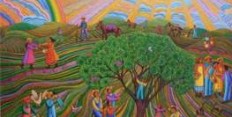
This passage continues from last week’s on the question of Jesus’ authority. Perhaps Jesus thought that if they didn’t get the first parable, he’d try another! It’s about a vineyard that has been carefully and lovingly planted by its owner. It is fertilized and watered; it is protected from harm; it is pruned and shaped, then it is tilled and aged to perfection. The vineyard has all of the necessary resources to produce a wonderfully rich harvest. It is the same story of God forming and reforming, of God breathing life into Creation, told a different way. And, again, the one who planted the vineyard entrusts its care to someone else.

But, the text claims, the harvest is not what was expected. Those responsible for the vineyard have not been good stewards. The harvest has fallen prey to greed and selfishness and a lack of trust between the workers and the owner. And so the owner sends his son, an extension and part of the owner’s own self. But the world rejects the son and, thereby rejects the owner. But the vineyard is not a vineyard like those to which the world is accustomed. And in a sweeping reversal, the owner takes that which has been rejected and makes it the thing most precious, the very foundation of the vineyard itself.

The tale is obviously meant to be read as an allegory, which means every word and image essentially means something else. So, don’t get too wrapped up in a literal understanding of it. In the first century understanding of it, the hearers would have remembered another tale of a vineyard from the writings that we attribute to the Prophet Isaiah. That writing depicts the vineyard as the people of Israel, the pleasant planting that had not turned out quite the way that God envisioned. But just as the understanding of God’s Creation becomes wider and more encompassing, the writer of Matthew’s version of the Gospel, takes this vineyard image and lays it out as a metaphor of the whole Kingdom of God, a sweeping reversal of powers and kingdoms to which we are accustomed, a Kingdom built with Christ as the head and cornerstone, the Christ that humanity once rejected. But even that rejection did not undo the vision that God holds. Instead God once again re-visioned the Kingdom and gathered us in. Once again, God invited us into God’s Creative activity. And that makes us, my friends, the laborers.

In the context in which it was written, the addressees are clearly the chief priests and Pharisees, the Jewish leadership, rather than the people as a whole. From that, the writer may be trying to claim that God will replace the false leadership with faithful leaders. But this understanding has through the years fueled anti-Semitism and implied that God has rejected Israel. I don’t think that’s really the intent. Lest we Christians become comfortable with the idea of Jesus rejecting those of the Jewish tradition on those grounds, we need to remember that we, too, are really good at laying out our rules and our understandings of who God is. We, too, are good at shutting people out of the kingdom and presenting a vision that is not in line with the one that God holds.

The focus here has more to do with the making of a new people (or a remaking of the “old people”), which would obviously call for new leadership. But the text claims that God’s people are now called to carry responsibility for enabling Israel, or God’s Kingdom, to bear fruit. The new people will now carry responsibility for tending the vineyard. The rejected stone and his people will assume leadership. The community is now in a position to learn and to celebrate the life of God in the vineyard. But the community is us.

It all but forces us to look at our lives, our specific attitudes and actions, in light of whether they represent an embrace or a rejection of the message of Jesus, the Son of God. As Christians we do well to focus not so much on what the passage has to say about Jewish leaders as what it implies about Christians. The “others” to whom the vineyard is given over in verse 41 are also responsible to the owner, charged with producing the fruits of the kingdom (v. 43).

What implications might this parable hold for how we are producing a harvest for God’s kingdom in our personal and public lives? What would this parable have to say to that troubling relationship we have with our child, our parent? What does it have to say to our inability to forgive ourselves? What does it have to say to us as we live, knowing that someone, whose opinion matters deeply to us, condemns us in some central way? What does this parable have to do with our reflection on the criminal justice system, the death penalty? What relevance might it have to our responsibility to help people in our society who, some would say, have brought their troubles upon themselves? The wicked tenants try God’s patience. So do we. We don’t know how they will respond next to the extended, undeserved mercy of God. How will we? (Alyce McKenzie, “Who are the Wicked Tenants?”, available at http://www.patheos.com/Resources/Additional-Resources/Wicked-Tenants-Alyce-McKenzie-09-26-2011?offset=1&max=1, accessed 28 September, 2011.)


  1. What meaning does this passage hold for you?
  2. What is uncomfortable about this passage for you?
  3. How do you relate that to the Exodus passage?
  4. This Sunday is World Communion. What does that say about the vineyard?


Some Quotes for Further Reflection:


If indeed we love the Lord with all our hearts, minds, and strength, we are going to have to stretch our hearts, open our minds, and strengthen our souls, whether our years are three score and ten or not yet twenty. God cannot lodge in a narrow mind. God cannot lodge in a small heart. To accommodate God, they must be palatial. (William Sloane Coffin)


I want to beg you as much as I can…to be patient towards all that is unsolved in your heart and to try to love the questions themselves…Do not now seek answers which cannot be given you because you would not be able to live them. And the point is to live everything. Live the questions now. Perhaps you will then, gradually, without noticing it, live along some distant day into answer.” (Rainer Maria Rilke, Letter to a Young Poet)


Christ became human that we might become divine. (Athanasius, 3rd century)


Closing


Here in this place new light is streaming, now is the darkness vanished away, see in this space our fears and our dreamings, brought here to you in the light of this day. Gather us in—the lost and forsaken, gather us in—the blind and the lame; call to us now and we shall awaken, we shall arise at the sound of our name.


We are the young—our lives are a mystery, we are the old—who yearn for your face, we have been sung throughout all of history, called to be light to the whole human race. Gather us in—the rich and the haughty, gather us in—the proud and the strong; give us a heart so meek and so lowly, give us the courage to enter the song.


Here we will take the wine and the water, here we will take the bread of new birth, here you shall call your sons and your daughters, call us anew to be salt for the earth. Give us to drink the wine of compassion, give us to eat the bread that is you; nourish us well, and teach us to fashion lives that are holy and hearts that are true.


Not in the dark of buildings confining, not in some heaven, light years away, but here in this place the new light is shining, now is the Kingdom, now is the day. Gather us in and hold us forever, gather us in and make us your own; gather us in—all peoples together, fire of love in our flesh and our bone. Amen.


 (“Gather Us In”, by Marty Haugen, in The Faith We Sing # 2236)