
Proper 14C: One Direction

Lighted Path Image.jpgFIRST LESSON:  Isaiah 1:1, 10-20

Read the Passage from Isaiah

Chapter 1 of the book we know of as Isaiah is made up of a series of small oracles, possibly coming from the prophet we have come to know as Isaiah, who prophesied in the last third of the 8th century BC in and around Jerusalem. At that time, the Assyrian empire, centered on the Tigris River far to the north east, was on the rise and presented a major threat to the peace and well-being of small countries on the Mediterranean coast like Judah and Israel. Early in Isaiah’s career, about 734 BC, he had advised the then king of Jerusalem, Ahaz, on this political problem. Judah’s neighbors to the north, Israel and Aram wanted to resist the Assyrians. Ahaz weighed up this risky strategy with the equally risky one of submitting to the Assyrians. Either strategy could cost his land and his people dearly. On the one hand he could find himself in conflict with his neighbors, and on the other, with the mighty Assyria.

The oracles in Isaiah 1 would seem, however, to come from the very last years of Isaiah’s prophetic work, around 701 BC, when a more faithful king, Hezekiah, is on the throne. The theme is one of judgment on a disobedient people. The Lord has brought up the people like children.  And, yet, they do not seem to grasp the covenant.  It’s not that they didn’t understand its intellectual meaning.  It’s that they did not have a sense of themselves in it.  They had forgotten to whom they belonged.  But for the prophet Isaiah, judgment and hope are linked.  This word of judgment that is handed down to these covenant-forgetting people is also one of hope.

Isaiah calls them to hear the word of the Lord, the teaching (torah) of their God—not just read it but hear it, digest it, make it part of you.  The prophet is telling the people to start paying attention to who they are and who they are supposed to be.  And this is not just calling for the removal of bad practices, but also pointing to those religious practices that have perhaps become excessive and no longer resonate with who God is and who God calls the people to be.

You can read this as a calling not to be religious people, but to be faithful.  And being faithful is about living a life of justice and mercy and compassion for others.  It is about rescuing and defending, about being advocates for those who cannot speak for themselves.  It is about getting out of yourself and becoming who God calls you to be. The prophet is demanding what is essentially a new reality for the people.  It is a call to perhaps admit that we need help, that we need God, that we need a reminder every now and then of who we are and who we should be.

But lest you think this is some sort of colossal game of hide and seek, the hiddenness of God is what draws us in, compels us to move, to change, to follow.  If God were obvious, all we’d need is religion to show off to this obvious God.  But a hidden God?  Now THAT requires real faith.  Maybe that’s the whole point.

I love the line in this passage about arguing.  You can just hear God.  God has had it.  “Fine,” God says, “go ahead, argue all you want.  You’re going to lose.  You’re wrong.  You’re so wrapped up in your frenzy of religion and tradition that you have forgotten what it’s about.  So, let’s argue.  Let’s look at all sides.  Hmmm!  Sacrifices and perfect worship versus lives of justice and mercy and love…high holy days versus inviting everyone in…meetings versus relationships.  Yep, thought so…I win!”  (And that means you do too!)  Because God wants the best for God’s people.  And God wants God’s people to want the best for each other.  You see judgment is brimming over with hope!


  • What is your response to this passage?
  • What is your image of “judgment” or of a “judging God”?
  • Why do we shy away from the idea of “judgment”?
  • In what ways is judgment a sign of hope?


NEW TESTAMENT:  Hebrews 11: 1-3, 8-16

Read the passage from Hebrews

Frederick Buechner says that “faith is the word that describes the direction our feet start moving when we find that we are loved.  Faith is stepping out into the unknown with nothing to guide us but a hand just beyond our grasp.”  Faith is knowing that all the madness of this world will not be the last thing standing.  Now keep in mind that this letter was to a faith community that was struggling.  It’s hard for us to fully imagine, but their lives were filled with persecution.  But the writer reminds them that this suffering is but temporary.  The writer is not belittling their suffering; just promising that it would not last.

Now we don’t really know who the writer of Hebrews is.  Third century theologian, Origen said that “only God knows” who wrote Hebrews.  When you think about it, that’s actually pretty appropriate.  The passage reminds us that there is an unseen reality that is greater and beyond where we are.  It acknowledges that life is sometimes hard.  In fact, that life can sometimes seem almost unbearable.  Sometimes our lives just don’t seem to “fit”.  We seem to be strangers in a strange land.  But we are reminded to look beyond. That is faith.  There is always something more, always something beyond what we can see and feel and touch, always beyond even what we know.  This is not just looking beyond our sufferings.  It is not just looking on the “bright side” of life.  It is knowing that there is something more.  It is hope.

And we are reminded that we are not the first ones to walk this walk.  Those that came before us have walked the same road.  We both follow them and journey with them.  And this is more than just hoping against hope that things will look up.  It is knowing that there is something beyond this.  It is not a calling to be superhuman.  Life happens.  We will grieve; we will suffer; we will wander aimlessly.  But trust.  Trust that God is there.  And dare to hope beyond the hopeless, know beyond the unknown, and see beyond the visible.

The end of this passage speaks of a new homeland.  It is that vision of the New Jerusalem.  I hesitate to think of it as a “place” but rather a new way of being.  Because if it was a place, we would have to wait until we arrive.  But a new way can seemingly seep into your life when you let it.  That vision of God is already here for the taking—or at least the believing.  We’re not just waiting for things to improve; we’re actually letting ourselves believe that this new reality has already begun to emerge.  And faith is not blindly following but is itself a new way of seeing this new reality even as it comes to be.

On some level, we live in a world that trains us as skeptics.  Now that’s not all bad.  Questioning and, for that matter, even arguing with God is what gives us a chance to grow.  Faith is not about just accepting something that makes no sense.  That’s what the Marxists would call the “opium of the people”; instead, faith  is about living a life that is filled more and more with meaning, a life that doesn’t just believe in this new vision, this new reality, but believes it into being.  C.S. Lewis once said that “it is since Christians have largely ceased to think of the other world that they have become so ineffective in this one.”  Perhaps faith means that we quit pursuing a dream of glorified self-improvement and begin to see ourselves in this new way of living that is both already and not yet.  Because what fits into that way of being is what we’ve dreamed of all along.


  • What meaning does this passage hold for you?
  • What does “tradition” mean to you?
  • What does “faith” mean to you?
  • What does it mean to you to “carry on”?


GOSPEL:  Luke 12:32-40

Read the passage from the Gospel According to Luke

Do not be afraid…sell your possessions…get ready…stay alert.  Well, that’s enough to stress anyone out!  And yet, we are told not to be fearful and anxious.  But that is the stuff that our society and our economy is made of!  I mean, really, without fear and anxiety, where would we be?  What would the stock market do then?  What would the newscasters talk about?  Who would buy insurance?  And, sadly, how would some of our churches sustain their attendance?  And, besides, if we quit worrying, we would lose the last bit of control that we actually have! But Jesus tells us not to be afraid, not to worry.  Rather, we are to pay attention and stay tuned for what comes next.

Now, of course, there are gobs and gobs of things that are based on the idea that if we’re not good little boys and girls, God will come and take only the good ones and the rest will be left behind.  Truthfully, that’s just bad theology.  God is not picking and choosing who gets to go live with God and who doesn’t based on our spiritual resume. God is just calling us to be ready, to pay attention so that we don’t miss what God is offering us.  After all, God is always and forever dropping into our life unexpectedly—if we’ll only pay attention.  God just doesn’t want us to miss the life that is envisioned for us.

This passage comes right after the Parable of the Rich Fool that we read last week.  So, now that you know that you don’t need all this stuff to survive, Jesus tells his hearers to let go of their worry and to focus on what is important.  In other words, shift your treasure toward God.  And if that is your treasure, then what is there to worry about?  I don’t think it’s about staying alert, staying focused as you wait for God.  I think it’s saying that staying alert, staying focused is the WAY you realize God’s Presence that is right there with you now.  In other words, the unexpected hour is now, whether or not you expect it.  God is offering home.  It is where we belong.

Now notice that Jesus doesn’t say to sell ALL of your possessions.  He doesn’t say to give everything away as alms.  He really is just saying to pay attention, to shift one’s priorities from worrying about money and stuff and what’s going to happen with our life to realizing that God is offering us life itself.  Keep the lamp burning.  Keep the vision before you.  We’ve been handed a Kingdom.  You just have to open your eyes to see it.  Don’t worry.  It’s there.  It is God’s good pleasure to give you the Kingdom.  God WANTS to do this, wants to with every essence of the heart of the Divine.  Shhhh!  Quit worrying.  It’s already here!  You don’t have to earn it.  You don’t have to be someone you’re not.  You just have to be.  So why are you worrying?  So, maybe worrying is the last of the stuff that we need to get rid of.


  • What meaning does this passage hold for you?
  • What is your image of the Kingdom of God?
  • What “alternative” to what we know could you imagine?
  • What does worry and fear play in your life?


Some Quotes for Further Reflection:


Faith means belief in something concerning which doubt is theoretically possible.  (William James, 19th century)

The opposite of faith is not doubt; it’s indifference. (Elie Wiesel)

Faith is taking the first step when you don’t see the whole staircase.  (Martin Luther King, Jr., 20th century)


Closing

God of Revelation and Mystery, You have opened the door of Your mystery and invited us to enter and explore.  Open us to your guidance and give us the faith to follow You with the passionate expectation of the wonder you will reveal and the mystery that you hold that forms and feeds our faith.  In the Name of the One who opened the door and showed us the way.  Amen. (S. Williams)
Lent 1C: Pilgrimage

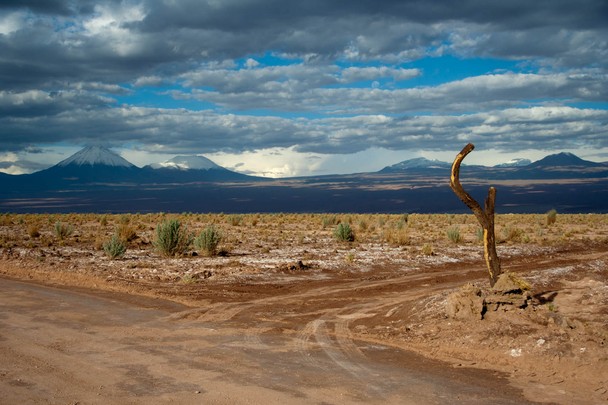
Fork in the desert roadOLD TESTAMENT: Deuteronomy 26: 1-11

Read the Old Testament passage

The Israelites have been traveling for generations. The stories are all through the Torah, stories of loss and despair, stories of feeling like an alien, stories of out and out abuse from their captors, stories of wandering in the wilderness. And, always, there has been a vision of home, a vision of where God is, a vision of where they belong. And so this passage begins with what they know to be: when they come to the land of promise, all will be right. They will be home.

But as the passage continues, there is also a calling of what it means to be home, of what it means to be “settled”, of what it means to “possess”. In essence, all of these promises and gifts that God gives come with a responsibility to give back. The meaning of possession here does not seem to be holding but rather entrusting. God gives and then they are called to give in return. The gifts that we are given are not “ours” the way we think of “ours”; rather they are ours to use in forming the world into the vision that God holds for us all.

But the passage also lays out exactly what is to be offered to God. It is not the leftovers. It is the first of the fruit of the ground that is harvested. Our modern slang would call it “off the top”. (Yes, even before the federal government!) And the directive is to take it and put it in a basket and offer it as a part of the worship of God. The passage even gives the exact response to be offered: “A wandering Aramean was my ancestor…etc.” I suppose it is an acknowledgment that this land that has been given is not an inheritance the way we have come to think of the word. It is not something that is “due”. Rather, we realize that we are all immigrants, all searching for a place to be. The word “wandering” can also mean “perishing”. In other words, God has raised up the perishing and brought them home. Isn’t that just like God?

As we begin this season of Lent, we are called to be aware of all that God has given us. And we, too, are called to respond, to offer our first fruits in thanksgiving to God. I think that we are also called to remember from whom and where we came. The truth is, we are all immigrants, wandering Arameans if you will. And God opens the doors and invites us home. And we are called to do the same. The doors are not ours to close. We do not possess what is behind them. Everything belongs to God.

Notice too that the offering is not required immediately upon entering the land. God is not standing at the door to freedom like some sort of holy ticket-taker. Rather, the gift of home also comes with the gift of time—to possess, to settle, to plant, and to harvest. And then, then, with thanksgiving and gratitude, God is to be offered the first of the harvest, the brightest and best. It is a reminder that no one is expected to enter the door fully formed. We are all living on that journey toward who it is God calls us to be. Perhaps part of that journey is a patience toward others as they take the time to do the same.

And, of course, it is hard to read this without remembering that this promise of land comes with the dispossession of others. Land, of course, is a finite commodity on this earth. But it really doesn’t say anything about displacement of the one that is there. The assumption is that all of God’s children, both resident and alien, will reside together and in joy celebrate the great bounty of home that God offers all of God’s children. We remember who we are, we remember the road that we traveled, we give thanks for all that God has done, and we welcome other journeyers in. (Hmmm! Sounds like Communion to me!) “Eternal God, we give you thanks for this holy mystery in which you have given yourself to us. Grant that we may go into the world in the strength of your Spirit, to give ourselves for others, in the name of Jesus Christ our Lord.”


  1. What is your response to this passage?
  2. What does the notion of being an alien mean to you?
  3. How do we define “possession”?   What would it mean for us to definine it as a “responsibility”?
  4. In what ways do we miss that feeling of gratitude for all that God offers us?
  5. What does “home” mean for you?
  6. What does this passage mean for us in this Lenten season?


NEW TESTAMENT: Romans 10: 8b-13

Read the Romans passage

In this passage, Paul is in the middle of explaining why the gospel does not amount to a betrayal of his own people or a denial of scripture. He claims that this new way of looking at things, this gospel, creates something that produces right relationship and, subsequently, right behavior. It takes further this idea of the commandments, “God’s law”, no longer being external “rules” but rather something that is indeed written on one’s heart. The basis for righteousness, for Paul, is being at one with God.

Paul professes that acceptance of Christ as Lord leads to liberation. Essentially, Paul has made the same claim before but, here, he is speaking of a more internalized relationship with God. It is beyond just doing right and living right; it is being one with God. At the end of the passage, Paul affirms the equality of all humanity before God, either Jew or Gentile. Right-standing before God is a gift available to all humanity for the asking. To stand approved before God (to stand justified) is simply a matter of faith.

The problem that Paul is countering is that most saw goodness as achieved by obeying the law. They saw their standing as progressed by merit. They could not grasp “perfection” in the sense of Christ. You can actually sense Paul’s frustration. His passionate belief in the Gospel and in Jesus Christ as Savior comes through. But you also get a sense of a certain frustration. He truly believes that the Gospel is open and inclusive of everyone and, yet, he is frustrated that he doesn’t seem to be getting the response that he desires. And yet, he never gives up on the notion that Israel is special, chosen. He cannot imagine that God would ultimately abandon God’s covenant people. God will not just quit loving God’s children. It is apparent that Paul’s image of God is of a Creator who is loving and caring toward all of Creation.

Paul is clear that if one professes to be a Christian, than one must openly confess the Gospel of Jesus Christ. And yet, this confession comes without shame. That’s a hard thing for us to fathom. After all, our society thrives on shame. We do not do a good job of letting things go—either ours or others. Paul is calling us here to let the shame go and experience joy instead. The notion of God’s love and generosity being open and available to all is a pretty bold statement when you think about it. Many in this world would take exception to that. So does that mean that we are all equal before God’s eyes? Probably not. Perhaps we need to get out of ourselves. This is not a statement about us; it is a statement about God. We don’t make our salvation happen; God does. God is at work in us—ALL of us.

This Salvation thing is a hard notion to grasp. So, we don’t have to DO anything? We don’t have to rack up a certain number of points for God to acknowledge our membership is this little club. We just have to ask; we just have to desire God; we just have to confess and believe or believe and confess. (If you notice, Paul, or possibly Paul’s translators, reversed the two.) Maybe it doesn’t matter. Maybe that’s the whole point. God desires that we confess not for God but for us; and we need to believe or there’s really no point to this at all. I don’t think it matters which comes first. (After all, God created both the chicken and the egg!) The point is that it’s offered to all. God comes to each of God’s children in God’s own way. So whatever we confess and whatever we believe that brings us closer to God is probably the whole idea. The passage is a reminder that Jesus did not come to straighten us out on the rules but to invite us home and show us what that meant. Now THAT is something in which I can believe!


  1. What meaning does this passage hold for you?
  2. Why is it so difficult for this world to see Salvation as inclusive?
  3. What does confession mean for you?
  4. What does belief mean for you?
  5. How, then, should we look at the “written law”?
  6. What does it mean to you to profess your “witness”?
  7. What does this mean for you in this Lenten season?


GOSPEL: Luke 4: 1-13

Read the Gospel passage

In the chapter prior to this reading, Jesus was baptized. The Spirit of God has entered him and he is ready to begin his ministry. It is a reminder of our own baptism and our own calling into God’s work. The writer of Luke then goes into the forty day temptation of Jesus in the wilderness. It says that he was led by the Spirit, the very essence of God. It is his first act of ministry—to become a sojourner, to go to God in prayer, to take a good hard look at his life and his calling. Then Jesus departs into the desert, the place of wildness and wonder. Think about all the stories of wilderness—Israel passing through the wilderness toward liberation. In the same way, Jesus is liberated from the world and we with him. Preparing for this liberation is a journey and involves struggle. For some the struggle is overwhelming. But God is leading us all.

During Lent, we often focus on the temptation (the “devil” part of the story, or whatever that is to you). Jesus is tempted where he is most vulnerable. He is tempted to guarantee having what he needs, to shift attention away from purpose. He is tempted to possess. Think about how famished Jesus really was. All Jesus has to do is say the word and he would have what he so desperately needs. Then, he is tempted by his desire of affirmation by God, the desire to impress. We all want to be liked; we all want to be validated. After all, he was just beginning his ministry…this would be a guarantee that they would LIKE him. Finally, he was tempted with the desire to be in control or to have glory or recognition. Think what Jesus could do if he had control and glory. Think how much more powerful his ministry would be. Henri Nouwen says that the temptations are to be relevant, spectacular, and powerful.

The truth is that Jesus was human and was tempted by typical human temptations. It is what we all want. Fred Craddock says that “temptation indicates strength”. (Boy, I am strong!) And, yet, we are often uneasy with the whole idea of Jesus being tempted. After all, he was Jesus. He should have been above all that, right? Each temptation invites Jesus to turn away from trust in God in a different way. So maybe this wasn’t about the temptation at all, but was rather a lesson in trust, in perseverance, in resistance of those things that will surely get in the way of our lives. There is an emptiness in all of us that must be filled. We are met each and every day with offerings of things with which to fill it. Jesus affirmed that, yes, we would be met with these temptations, and, that, yes, God’s deepest desire is that our emptiness be filled with God. To be Christian or, actually, to be human, is to realize that that emptiness will never be filled without God. It is that for which it is made. And, really, what good would Jesus have really done us if he had been above it all, if he had never be tempted at all? Where would we be then? Jesus did not come to be a superhero above all that comes about; Jesus came as a human—as a you, as a me. Jesus came not so that we would be perfect but so that we would see what we were missing. After all, being relevant, or spectacular, or powerful are really overrated. Relevancy is short-lived; “spectacularness” is hard to maintain (after all, don’t you sometimes just want to go around in your warm-ups with no makeup?); and, as Lord Acton would tell, us, “power corrupts”. Jesus wasn’t showing us how NOT to be tempted; Jesus was just putting relevancy, spectacularness, and power in their proper places. Because, after all, when they’re gone, God is still waiting for us to return home.

But looking at it this way, the desert becomes the threshold through which we journey. It is a time for preparation, a time for readying oneself to claim who God calls you to be—God’s beloved child. And the only choice one has is to repent, to turn around, to change, to turn toward God.

Now, our version of the wilderness is sometimes very difficult to grasp. In our world of perfectly manicured lawns and perfectly coiffed houses, we usually do everything in our power to avoid wilderness in our lives. Wilderness means to us some sort of deprivation and, thus, a loss of power. We do everything we can to see that our lives stay exactly where we want them. We take a pill when we have a pain. We use cosmetics so that we won’t look our age. And who of us would ever be caught without access to a telephone? The wilderness is the thing that we are always trying to avoid. The wilderness does not fit into our carefully thought-out plans.

Jesus did not see deprivation but, rather, an emptying of himself before God. In fact, if you think about it, Jesus’ baptism propelled him into the wilderness. Maybe that’s our problem. Maybe we missed our wilderness. Maybe we missed our emptying. This emptying brings us in touch with what we really need—and nothing more. Without our pills and our cosmetics, our cell phones and our online calendars, we are vulnerable. Thank God! For when we are powerless, when we are vulnerable, where do we go? We look to the only place we know. Because even we, who are normally so in control of our lives, must look to the compass if we do not know the way. And there, we become acutely aware of God’s ever-presence. It is only when we have truly emptied ourselves that God can fill us with God and there we are nourished and fed by those things for which our souls truly hunger. From this we can grow in God’s spirit.

That’s what Lent is—it’s a pilgrimage through an intentional wilderness. These forty days are our emptying time—the time when we strip all of our preconceptions away and meet God where God is—right there with us. We do not walk this road alone. God is always there. And when we are tempted to once again take control, God will still be there. Lent is the time when we allow God to work on us that we might burst forth on Easter morning in radiant bloom. It is a time of journeying toward home.


  1. What meaning does this passage hold for you?
  2. What does temptation mean for you?
  3. Are you bothered by the notion of Jesus being tempted?
  4. What does this say to you about your own Lenten journey?
  5. What is uncomfortable about this whole image of the wilderness?
  6. What does the wilderness image mean for you?


Some Quotes for Further Reflection:

Not only is another world possible, she is on her way. On a quiet day, I can hear her breathing. (Arundhati Roy)


At the center of the Christian faith is the history of Christ’s passion. At the center of this passion is the experience of God endured by the godforsaken, God-cursed Christ. Is this the end of all human and religious hope? Or is it the beginning of the true hope, which has been born again and can no longer be shaken? For me it is the beginning of true hope, because it is the beginning of a life which has death behind it and for which hell is no longer to be feared…Beneath the cross of Christ hope is born again out of the depths. (Jurgen Moltmann)


The promised land lies on the other side of a wilderness.{Havelock Ellis}


Closing


Those of us who walk along this road do so reluctantly. Lent is not our favorite time of year. We’d rather be more active—planning and scurrying around. All this is too contemplative to suit us. Besides we don’t know what to do with piousness and prayer. Perhaps we’re afraid to have time to think, for thoughts come unbidden. Perhaps we’re afraid to face our future knowing our past. Give us the courage, O God, to hear your word and to read our living into it. Give us the trust to know we’re forgiven, and give us the faith to take up our lives and walk. Amen.


(“The Walk”, from Kneeling in Jerusalem, by Ann Weems, p. 21)

And join me for a daily Lenten meditation at Dancing to God